
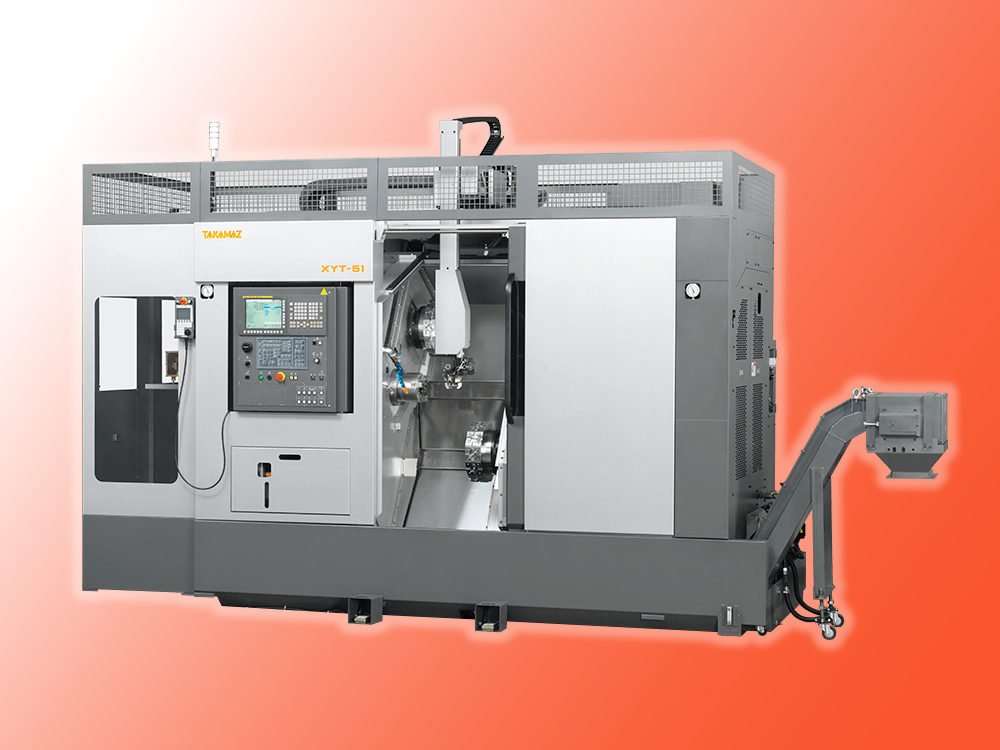
What’s the difference between a shop that grows and thrives, and one that struggles to stay profitable? You will find that difference in a single part’s cycle time. When running high volumes, saving three seconds per cycle determines if you win contracts or lose them.
However, selecting a high-production lathe means considering precision, reliability, and automation capability in addition to the highest spindle speed on the spec sheet. If you’re currently in the market for a new turning center, we’ve put together a checklist to help you make a decision that will pay off in productivity.
What’s Your Thermal Profile?
Thermal stability is an often-overlooked aspect of high-volume turning. If your lathe drifts as it warms up during the morning shift, you’ll probably spend the first hour of your day fighting for tolerance.
When choosing a lathe, prioritize one-piece bed designs with thermally compensated spindles and turrets.
High-production environments generate a lot of heat. Without a frame designed as a heat sink, you will constantly manual-offset to maintain tolerances. A machine that’s stable at 8 AM AND 5 PM is a machine that allows for true lights-out production with automation.
Footprint Versus Rigidity
Saving floor space is important, but we also want to avoid sacrificing rigidity for a compact footprint. General-purpose lathes often lack the damping required for aggressive material removal without chatter.
Look for a heavy, low-center-of-gravity casting. Choose heavy iron if you plan to push your machine to its limits. Rigidity is essential for tool life because micro-vibrations are the enemy of carbide. If your machine frame flexes, your end mills and turning inserts will chip far faster than they should.
Automation-Ready is No Longer Optional
Are you using gantry loaders, bar feeders, or cobots to feed your lathes? If not, you’re most likely leaving money on the table! But here’s the catch: integration matters. A machine that was designed with add-on automation in mind will always be more reliable than a machine where automation was forced into place after the fact.
When considering a new machine for purchase, check to see if there’s a clear, engineered path for a gantry loader, and whether the turret is configured to allow for the shortest possible tool travel distance.
Every millimeter of distance your turret has to travel between the spindle and the turret’s park position is wasted time. In high-volume turning, reducing the travel distance is the secret to cutting cycle times by 10% or more!
Standardize Your Tooling
Don’t forget the “boring” stuff, like tooling interfaces! Does the lathe use a standard BMT or VDI turret? Are the tools easily swappable?
Can you easily source high-quality tooling locally? Does your shop have a standardized setup protocol that allows any operator to change an insert and reset the machine in under five minutes?
If your setup process is cumbersome, you’ll most likely delay your startups. In high-volume shops, changeover time can be one of the biggest bottlenecks!
Find a Partner, Make the Right Choice
Buying a tool in this context is essentially defining the capability of your shop for as long as that machine will last you. Focusing on thermal stability, structural rigidity, and seamless automation integration means that your next investment can be a profit-generating asset.
As your local Takamaz distributors in NC, we advise clients to look at the total cost of ownership, not just the purchase price. A machine that requires a specialized engineer from across the country to fix a minor error is a machine that will eventually become a liability. You need a local partner who understands your specific part geometry needs and can help you optimize your tooling from the very first run.
Contact Machine Tech today to walk through your parts requirements and see if a Takamaz solution is the right fit for your production goals.